
Why floor lamps are the most underrated design tool

Most people shop for a floor lamp the way they shop for a phone charger: functional, forgettable, whatever fits the corner. That's a mistake. A floor lamp is one of the few objects in a room that does double duty as both a light source and a piece of furniture, and most homes are using maybe a third of what it can actually do.

Watch the full Home Tour of Rumah Harumi from Interior Insights here.
A floor lamp solves a problem overhead lighting can't, and why floor lamps are the most underrated design tool
Ceiling fixtures light a room from a single, fixed point, usually the center. That's efficient, but it's also flat. Every object in the room gets roughly the same amount of light from roughly the same angle, which is part of why so many rooms with plenty of overhead light still feel visually dull. Heres a video on 9 Common lighting mistakes to avoid.
A floor lamp introduces light from a different height and a different position entirely. It creates a secondary light source at eye level or below, which adds depth the way a single overhead source never can. Two light sources at different heights automatically create shadow and contrast, and shadow is what gives a room dimension.
This is the core idea behind layered lighting: ambient light for general visibility, task light for specific activities, and accent light for mood and depth. A floor lamp is rare in that it can serve all three roles depending on where you place it and what bulb you choose.
Where placement changes everything
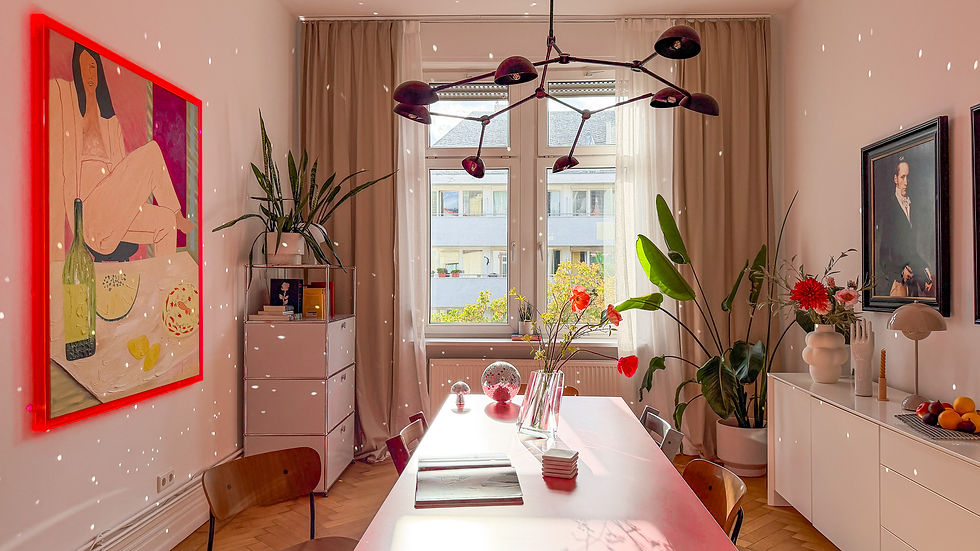
The most frequent error with floor lamps is positioning them where the room already has sufficient lighting, typically near a window or beneath an existing ceiling fixture. This completely squanders its potential. If you need more advice on layout and placement, my interior workbook includes an entire chapter on the topic.
Put a floor lamp in a corner that would otherwise sit dark and it does real work: filling a dead zone, softening the room's edges, and making the space feel larger than the square footage suggests. A dark corner reads as smaller and less finished than it is. Light it, and the eye extends the room's boundaries outward.
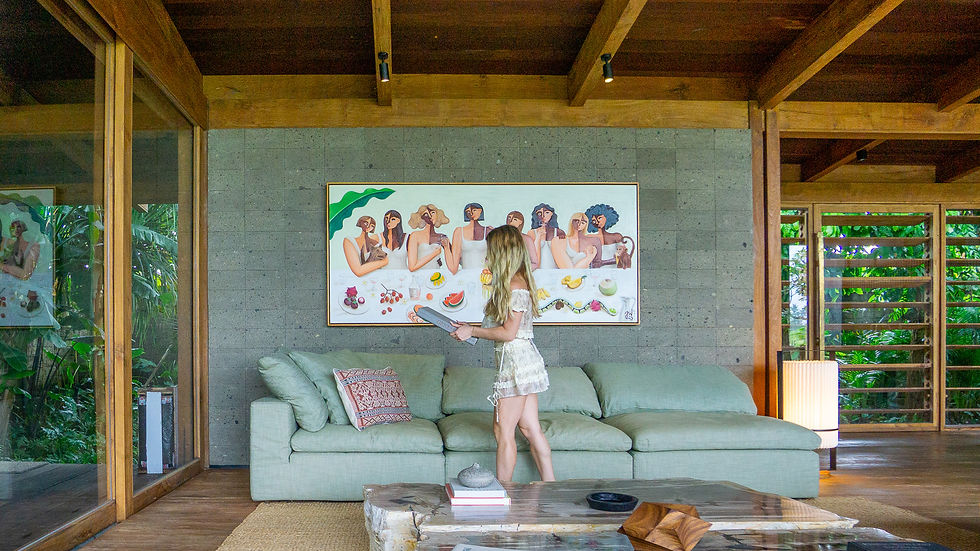
Placed beside a reading chair or sofa, a floor lamp handles the job overhead light does poorly: a focused pool of light at the height where you're actually working, reading, or sitting, without flooding the whole room in brightness you don't need.
The shape and shade matter more than the finish
People spend a long time agonizing over brass versus black versus wood, and comparatively little time thinking about shade shape, which affects the room more than the finish does.
A shade that's open at the top throws light upward, softening the ceiling and making the room feel taller. A drum shade that's closed at the top directs light down and out, which works better for a focused reading pool but does less to open up the room as a whole. Neither is wrong. They're different tools, and knowing which effect you want is the actual decision, not the metal finish.
Arc lamps, the kind that curve out over a sofa or chair, solve a specific proportion problem: they deliver overhead-style light without requiring a side table or floor space directly next to the seat. In a small room, that's often the difference between a corner that works and one that stays cluttered with a side table nobody needed.

Bulb temperature is doing more work than you think
A floor lamp with the wrong bulb temperature can undo everything good about its placement. Warm light, in the 2700 to 3000 kelvin range, is what reads as cozy and residential. Cooler light, above 4000 kelvin, reads as clinical, and in a floor lamp specifically, that mismatch is more noticeable than it would be overhead, because the lamp sits at a height where you look directly at or near the bulb.
If a room already has warm overhead lighting and the floor lamp runs cooler, the two sources will visibly compete rather than blend, and the room will feel unsettled in a way that's hard to diagnose without knowing to check kelvin ratings.
A floor lamp is furniture, not an accessory
The habit of treating floor lamps as an afterthought, something added once the "real" furniture is placed, means most homes underuse one of the few objects that can change how a room feels without touching a single wall or piece of upholstery.
Think of a floor lamp the way you'd think about a chair: it has a silhouette, a height, a presence in the room whether it's on or off. Choose it with the same intention you'd bring to a piece of seating, and place it with the same care you'd give to balancing a room's layout.
If you want a deeper framework for how lighting interacts with the rest of a room's design logic, not just fixture by fixture but as a full system, the Interior Color Masterclass covers how light, color, and material work together to shape how a space actually feels.
Frequently asked questions
Where is the best place to put a floor lamp in a living room?
Dark corners and areas beside seating that lack task light are the two most effective placements. Avoid putting a floor lamp somewhere the room already gets ample light, since it adds the least value there.
What size floor lamp should I get for my room?
As a general guide, the lamp's shade should sit at or slightly below eye level when seated nearby, and the overall height should feel proportional to the furniture around it. A lamp that's too short next to a tall sofa will look like an afterthought rather than a considered piece.
Should floor lamps match ceiling lights?
They don't need to match in finish, but they should be reasonably close in bulb color temperature. A mismatch in warmth versus coolness between fixtures is more noticeable than a mismatch in metal finish.
Are arc floor lamps outdated?
No. Arc lamps solve a specific spatial problem, delivering overhead-style light without requiring floor space next to a chair, which makes them genuinely useful in smaller rooms rather than simply a style trend.
How many floor lamps should a living room have?
Most living rooms benefit from one to two floor lamps used as part of a layered lighting plan alongside table lamps and ambient sources, rather than relying on a single ceiling fixture for the whole room.
A floor lamp is one of the cheapest ways to change how a room feels, and one of the most consistently underused. Treat the next one you buy as a design decision, not a fill-in for a dark corner.
Comments