
The interior design trends actually worth watching in August 2026

Every January brings a fresh batch of interior design trends, and most of them are forgotten by summer.
The interior design trends worth watching in 2026 are different.
They were not invented for a feed. They come from centuries of craft, architecture, and fashion, and they are resurfacing now because people are tired of rooms that look considered but feel hollow.
I actually made a whole video just about the Interior Design Trends of 2026, you can watch it here.

Raw materials with a history: metalwork and colored glass
Metal is not new. It has been shaped by hand for thousands of years, and in 2026 that history is exactly what people want to see again.
Instead of polished chrome and glossy finishes, the pieces gaining ground are punched tin, hammered steel, and edges left raw enough to look architectural. Historically, these techniques come from places where metal was worked manually rather than by machine: southern Europe, parts of Mexico, North Africa. The hand was always part of the object.

Fashion made the same shift first, trading polished gold for oxidized jewelry and imperfect finishes. This is not nostalgia. It is exhaustion with perfection, and a pull toward materials that carry evidence of how they were made.

Colored glass is heading in a similar direction, though 2026 will bring a quieter version of what has already been trending. Before electric light, glass was not decoration. It controlled a room's atmosphere, filtering daylight and, in places like churches, using color to tell a story rather than simply to look pleasant.

Expect hand-blown pieces with slight imperfections and muted tones rather than saturated color. A single glass vase catching afternoon light can shift the color of an entire room for an hour, and that is the appeal: light itself becomes part of the design, not just something a room receives.

Structure returns: borders and lace
After years of seamless surfaces and micro cement, visual fatigue has set in. Borders, the Seljuk-style detail reappearing on walls, textiles, and trim, are the direct answer to that fatigue.
Borders were never purely decorative. In textile work, a border was structural. It kept fabric from fraying at the edge, which means what looks like ornament today started as reinforcement.
Lace tells a similar story. It first returned in the 1960s and 70s through bohemian culture, a soft, handmade rejection of rigid modernism, and it is having the same kind of moment now.
You will see it as tiled borders, stitched outlines, and framed wall details. It shows up on napkins and curtains the way it always has, but also translated into wood and other unexpected materials.
The point is not to copy lace exactly. It is to borrow its logic: pattern at the edge, restraint in the middle.

The 2026 interior design trends built to last: mid-century modern and Mexico City
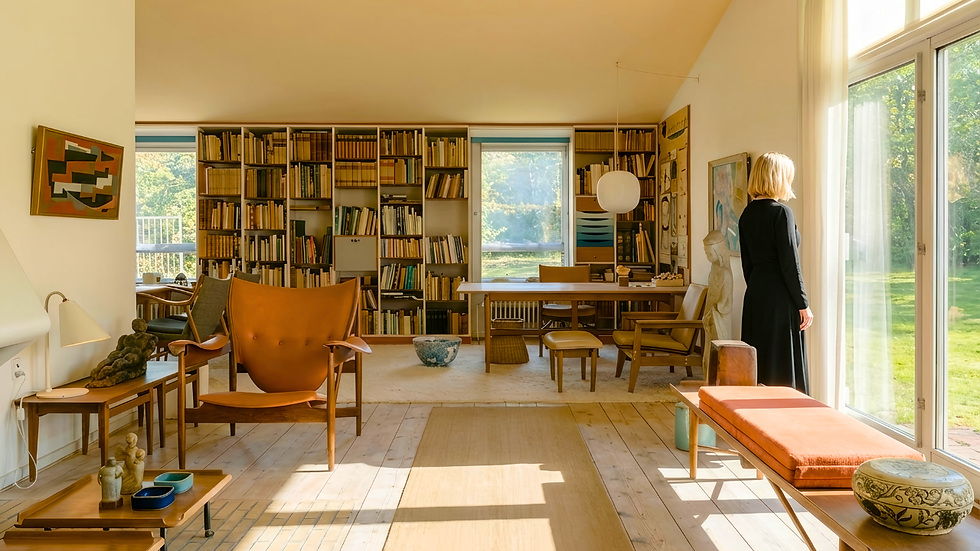
Mid-century modern is not trending again. It never left, because it was designed around a rule most people do not know: human scale. After World War Two, designers prioritized comfort, proportion, and daily use over spectacle.
What changes in 2026 is which pieces get chosen. Expect fewer iconic replicas and more unique, vintage, and slightly quirky finds, paired with contemporary art, textured walls, and warm woods.
Mid-century design works because it supports a life instead of dominating a room. That is a quality that does not go out of style.

Mexico City is shaping design in a different way, not as a location to copy but as an attitude to learn from. I have stood in rooms there where color is not an accent choice. It is the architecture itself, pulled from natural pigments and treated as a form of expression rather than a backdrop.
If you want a full color process instead of one borrowed palette, the Interior Color Masterclass covers exactly this: choosing a personal palette and applying it with intention, the way these spaces do.

You can see the same instinct at work in this Hamburg apartment, where bold color and handmade details tell a specific story instead of following a trend.
The lesson from both movements is the same. Design that lasts is design rooted in a personal story, not in what is currently popular.

Playfulness returns, with more restraint
Seriousness is exhausting, and 2026 brings a return of whimsy: stripes, unexpected textures, surrealist touches that nod to artists like Salvador Dalí. But this version of playfulness is more disciplined than the last one.
Expect whimsy with structure rather than chaos. A room does not need to follow strict rules to feel intentional. It needs a clear point of view, applied consistently, whether that point of view is playful or restrained.
That is arguably the real story behind every trend on this list: not more inspiration, but more intention. If restraint feels more like your instinct than pattern, the same idea shows up from the opposite direction in our piece on negative space in interior design.
I actually made a whole video just about the Interior Design Trends of 2026, you can watch it here.

Frequently asked questions
What are the biggest interior design trends for 2026?
Decorative metalwork, colored glass, textile-inspired borders, lace detailing, mid-century modern pieces, Mexico City-influenced color and craft, and a more structured version of playful, whimsical design. Each one is rooted in a specific historical or cultural source rather than invented for social media.
Why are 2026 interior design trends looking backward instead of forward?
Because they are rediscoveries of techniques and materials with real history in craft, architecture, and fashion, not new inventions. That history is part of why they feel more grounded than typical seasonal trends.
Is mid-century modern design still relevant in 2026?
Yes. It was built around human scale, comfort, and daily use, which is why it has outlasted most other design movements. In 2026, the shift is toward unique and vintage pieces rather than iconic replicas.
What makes Mexico City design distinctive?
Color functions as architecture, not decoration. Pigments are often natural, walls are treated as a surface for expression, and the overall effect reflects a strong personal or cultural identity rather than a generic neutral palette.
How do I bring these trends into my home without it looking chaotic?
Pick one, apply it with intention, and build the rest of the room around supporting it rather than competing with it. A clear personal color process makes this far easier than reacting piece by piece.
None of this is about copying a room you saw online. It is about noticing why certain materials, colors, and forms keep resurfacing across centuries, and choosing the ones that actually belong in your own space. If you want help and guidance along the way, Im there to help! Work with me here.

Comments