
A Historic Villa Transformed Into a Modern Colorful Loft | Dimi Vesos' Hi Fi Villa

Each room in Dimi Vesos' 120-square-meter hi-fi villa operates as its own color world. One room holds deep greens. The next shifts entirely. The ceilings push upward, the period moldings intact.
A 120m² villa built more than 200 years ago, reimagined as a modern loft where bold interior design choices replace original function without erasing original form.
The design logic here: honor the structure, then let each room tell a different story.
Watch the Full Home Tour on our YouTube Channel: Click here 🎥✨

Historic Bones Need No Apology
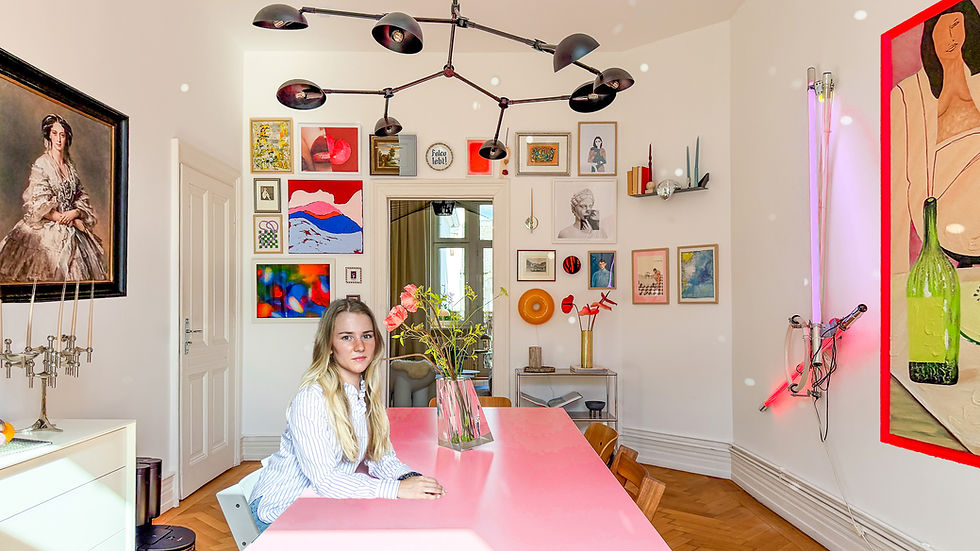
The villa's original architecture is left completely visible. High ceilings. Period moldings. Authentic materiality running through the walls and floors. The structure becomes the fixed framework from which every interior decision is made.
Contemporary furnishings and bold color choices don't compete with this architecture. They respond to it.
What to Learn: When working with older architecture, treat the existing details as fixed design points rather than obstacles. Start with the bones first. Then layer your choices around them.
Choose furniture at a scale that respects ceiling height. Select materials that sit comfortably beside original plasterwork. You are working with history as a collaborator, not designing over it.
Bigger Picture: The strongest historic conversions aren't renovations. They're conversations between what the building once was and what now lives inside.

Giving Each Room Its Own Color Identity
Each room in this villa operates as a self-contained color world. The kitchen leans into a soft, almost surreal pink—warm, playful, and unexpected—while the living spaces shift into deeper, moodier tones that feel grounded and calm.
The palette resets entirely from room to room.
There is no single unifying wall color threading through the apartment. The identity of the home lives in this variety.
What to Learn: Giving each room its own color identity requires a unifying thread to stop the variety from reading as chaotic. It might be a shared material, a consistent saturation level, or a tonal family that runs across every room.
Decide on the rule before you break it. When you know your constraints, every bold choice reads as intentional rather than accidental. You are designing a sequence, not a series of disconnected decisions.
Bigger Picture: Interior design doesn't require consistency across rooms. It requires intention within each one. Build your own room-by-room color vocabulary with our Color Masterclass. Click here 🎥✨

How 120 Square Meters Reads as Generous
120 square meters is a moderate footprint, yet this villa reads as genuinely spacious. Ceiling height plays a role. Open flow between zones plays a role. Furniture placement avoids crowding.
Each zone is used with intention. Nothing is leftover space.
What to Learn: Space perception in interior design is about proportion, not size. A room with high ceilings and correctly scaled furniture feels more generous than a larger room filled with heavy, low pieces.
When planning your own space, think about sightlines first. If you can see through to the far wall without interruption from the entrance, the room reads as large. You design the perception, not just the floor plan.
Bigger Picture: Every design decision either expands or contracts how space is perceived. Noticing which is which is a learnable skill. Document and improve your layout skills with the Interior Workbook. Click here 🎥✨
This villa proves that age and boldness are not contradictions. They are the collaboration.

Watch the Full Home Tour on our YouTube Channel: Click here 🎥✨


Comments